Overlapping Fixtures and Festivals Drive Shifts in Betting Structures
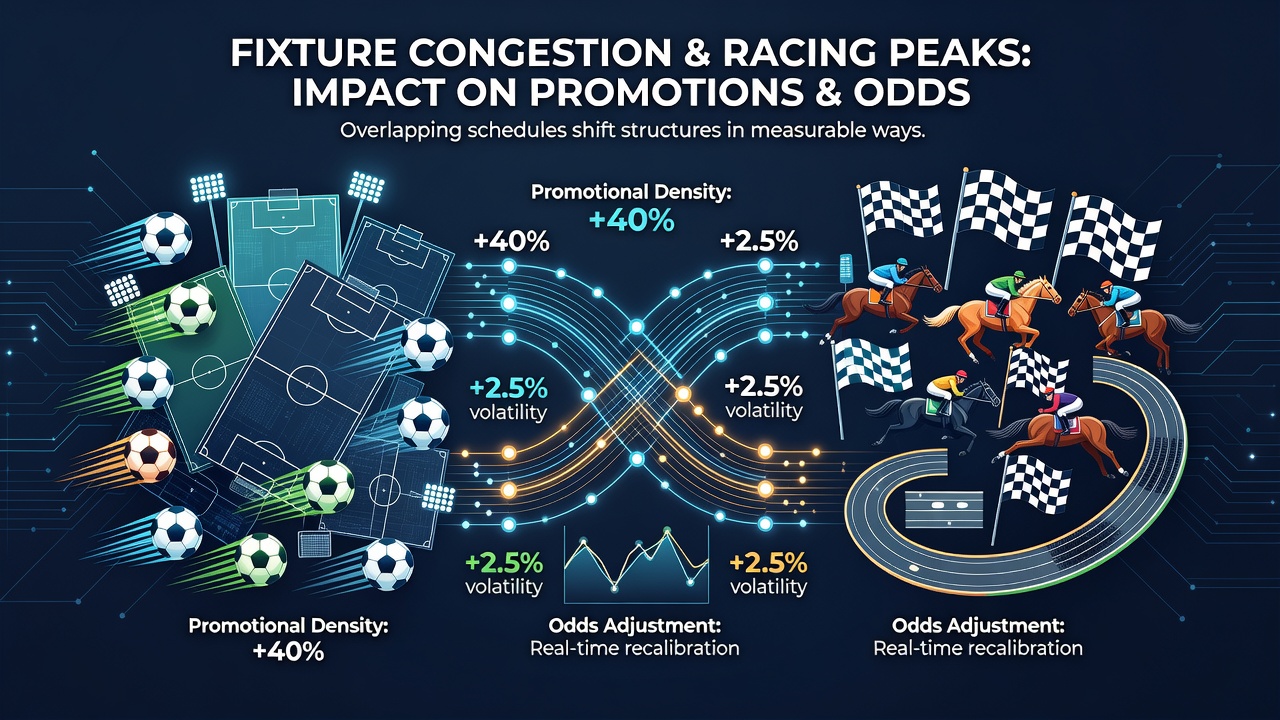
Football leagues frequently compress multiple fixtures into short windows, and major racing festivals reach their annual peaks at the same time, which produces measurable changes in promotional offerings and odds adjustments across betting platforms. Observers track these overlaps because data from past seasons shows consistent patterns in how operators respond to increased event volume.
Fixture Congestion in Football Leagues
Domestic leagues pile matches together during winter months and at season ends, while cup competitions add extra games that force teams to play every few days. Researchers examining scheduling data note that player rotation increases and fatigue metrics rise during these stretches, which in turn influences pre-match odds as bookmakers incorporate injury reports and squad depth statistics into their models. European competitions often align with domestic calendars, and this compounds the density without requiring any single governing body to alter its rules.
Peak Periods at Major Racing Festivals
Horse racing calendars concentrate high-profile meetings in clusters, and events such as the Cheltenham Festival or Royal Ascot draw substantial betting turnover in compressed timeframes. Form guides and speed ratings receive heightened attention during these windows, yet the simultaneous arrival of football congestion means operators must process data from both sports within the same operational periods. Historical records indicate that turnover spikes appear in both sectors when dates coincide, and this volume prompts recalibrations in promotional bonuses tied to accumulators or each-way bets.
Measurable Effects on Promotions and Odds
Operators adjust free bet structures and enhanced odds offers when fixture lists and festival schedules overlap, because risk exposure calculations shift with the added number of outcomes. Data from multiple seasons reveals that accumulator payout rates and matched betting margins respond to these overlaps through tighter limits or altered cash-out values. Those who monitor line movements observe that soccer match odds incorporate pitch conditions and travel fatigue more explicitly when racing festivals run concurrently, while turf condition updates at racecourses receive parallel scrutiny from the same analytical teams.

Studies conducted by independent research groups, including work published through the Australian Gambling Research Centre, document how simultaneous high-volume periods in different sports lead to refined probability models that account for cross-sport liquidity flows. These adjustments appear in both fixed-odds and exchange markets, where bettors and syndicates test value across the two codes during the same weeks.
Patterns Observed Around June 2026
League calendars projected for the 2025-26 season indicate that end-of-campaign congestion will intersect with early-summer racing festivals, and analysts expect similar recalibrations in promotional structures. June 2026 also coincides with the final stages of international tournaments in some regions, which adds another layer of fixture density that operators have previously managed through segmented bonus pools and dynamic odds updates. Evidence from earlier cycles shows that these periods produce measurable differences in average stake sizes and bet-type distributions when football and racing events run in parallel.
Industry Data on Market Responses
Reports from bodies such as the American Gaming Association track how sportsbooks in various jurisdictions handle multi-sport peaks, and the findings align with patterns seen elsewhere: promotional budgets get redistributed toward events with higher predicted engagement. Odds compilers incorporate real-time data feeds on team news and track conditions more rapidly, which reduces the window between information release and price movement. Observers note that accumulator insurance offers and each-way terms sometimes tighten during these windows because the combined volume from both sports increases overall liability calculations.
Conclusion
Calendar overlaps between congested football schedules and peak racing festivals generate documented shifts in promotional design and odds formulation. Data collected across multiple seasons confirms that operators respond through targeted adjustments rather than uniform changes, and these responses remain consistent enough for analysts to identify recurring patterns. As June 2026 approaches, the same structural dynamics are expected to influence market behaviour in line with historical observations from comparable periods.